 dsale@topsfp.com
 русский
 English
 español
 العربية
 中文
中文



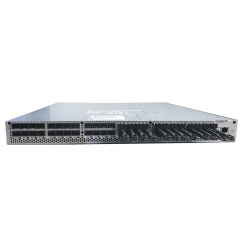
H200 procurement begins with the exact system, not a market headline
NVIDIA H200 is a GPU family used in multiple server and system configurations. It should not be selected from news about market availability, trade policy, regional supply, or generic “clearance” claims. Those subjects change quickly and do not establish that a specific GPU, server, adapter, storage device, or network design is suitable for a given project.
A procurement decision should begin with the intended workload, the exact H200 form factor, the qualified server platform, and a complete bill of materials. Then validate power, cooling, firmware, networking, storage, software, physical installation, service coverage, and acceptance tests. This guide focuses on that engineering process and deliberately makes no assertion about prices, inventory, delivery dates, government policy, export licensing, or regional availability.
Separate H200 SXM and H200 NVL configurations
NVIDIA publishes separate H200 SXM and H200 NVL configurations. Both are listed with 141 GB of HBM3E GPU memory and 4.8 TB/s GPU memory bandwidth, but they have different form factors, system options, power envelopes, and interconnect arrangements. NVIDIA’s published specification also notes that some product values are preliminary and may change. The exact data sheet and server manufacturer configuration must therefore be checked again before a purchase order is released.
H200 SXM is used in NVIDIA HGX H200 partner and NVIDIA-Certified systems with four or eight GPUs. H200 NVL is described separately for MGX H200 NVL partner and NVIDIA-Certified systems with up to eight GPUs. Do not treat an SXM-based HGX server and an NVL server as interchangeable. The GPU board, host platform, cooling design, NVLink topology, PCIe connectivity, power distribution, and supported software can differ materially.
Define the workload before choosing GPU count and topology
Document whether the project is intended for AI inference, fine-tuning, distributed training, high-performance computing, analytics, visualization, or a mixed use case. Then record model size, precision, context length, batch size, concurrency, data-set location, checkpoint frequency, availability target, and benchmark method. GPU memory capacity is important, but application performance also depends on memory behavior, CPU and host I/O, storage throughput, network topology, framework version, and optimization settings.
NVIDIA’s HGX H100/H200/B200 reference architecture describes four- and eight-GPU configurations. Its H200 eight-GPU reference information cites up to 1,128 GB of aggregate GPU memory for an eight-H200 configuration. This is a platform-level planning value, not a substitute for the exact OEM bill of materials. Verify the offered system’s GPU count, CPU model, DIMM population, drive configuration, NIC count, management controller, and approved firmware baseline with the supplying system vendor.
Build the network and storage designs as separate workstreams
An AI server is not an isolated accelerator. Multi-node performance depends on a compatible compute fabric, storage fabric or path, and management network. The NVIDIA HGX reference architecture uses a defined CPU-GPU-network-adapter pattern for H200 systems and describes different networking options. The exact choice for a deployment should be justified by workload evidence, expected cluster size, redundancy requirement, and the interconnect supported by the selected OEM platform.
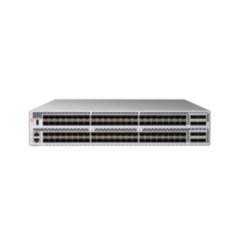
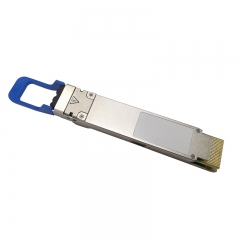
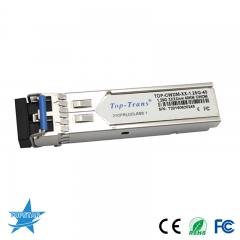
List every adapter or SuperNIC, switch, port speed, medium, connector type, cable or transceiver part number, breakout mapping, route length, and firmware level. Validate these as end-to-end combinations. A high-speed port does not make every optical module, DAC, AOC, or switch mode compatible. Confirm host-slot allocation, PCIe generation, cooling path, remote-end port configuration, and software support before ordering network components.
Storage requires its own capacity, resilience, and performance plan. Separate boot, container image, model repository, dataset staging, checkpoint, log, and backup requirements. Calculate usable capacity after protection overhead and test the actual application data path. A high sequential-read number alone does not show how a cluster will behave during sustained checkpoint writes or during a rebuild event.
Validate rack power, cooling, and physical serviceability
GPU platforms require detailed rack engineering. Use the exact server vendor’s current power specification to calculate the node envelope, including GPUs, CPUs, memory, drives, network adapters, fans, power supplies, and startup or transient headroom. Validate the rack PDU, input voltage, branch circuits, redundancy path, cooling capacity, airflow direction, rail kit, rack depth, floor loading, cable route, and service clearance.
H200 SXM and H200 NVL publish different maximum TDP values in NVIDIA material, so do not copy one value into the other platform’s design. Check the actual system configuration and its vendor limits. During integration, confirm that the selected components follow the same airflow direction and that cables do not block fan intakes or service access. Keep power-feed identifiers, rack position, and thermal monitoring requirements in the project handover record.
Control software, firmware, and operational acceptance
Before production, agree a supported software stack: operating system, GPU driver, CUDA version, firmware, communication library, container runtime, orchestration or scheduler, monitoring, and security controls. Record current versions and upgrade procedures. Treat firmware changes as controlled maintenance because GPU, NIC, switch, storage, and management firmware can affect qualification and supportability.
Define acceptance tests in advance. At minimum, verify physical installation, management access, network connectivity, storage paths, workload execution, monitoring, error counters, burn-in, and recovery procedures. Run a representative model or application test using the intended driver and framework. Retain the configuration export, test results, serial numbers, and support contacts so replacement or expansion can be handled without rediscovering the original design.
Use a no-surprises qualification checklist
- Specify H200 SXM or H200 NVL, GPU count, exact OEM server model, and a complete, current bill of materials.
- Confirm the target workload and measure it with the proposed software and infrastructure stack.
- Validate host I/O, adapters, switches, optics or cables, storage, firmware, and management components as qualified combinations.
- Calculate rack power and cooling from the exact vendor system configuration; check physical fit and service clearance.
- Complete documented burn-in, application, monitoring, and recovery tests before production acceptance.
Use current NVIDIA and OEM documentation for final decisions
H200 systems evolve through OEM configurations, firmware releases, reference architectures, and product revisions. The final authority is the current documentation for the exact server and connected components. Avoid using news reports, pricing tables, or policy commentary as technical configuration evidence.
Primary references: NVIDIA H200 specifications, NVIDIA HGX H100/H200/B200 reference components, and NVIDIA HGX AI Factory reference architecture overview. Reconfirm current OEM documentation and support coverage before procurement.
